Musebase
AI characters that remember, change with their content, and can be rolled back.
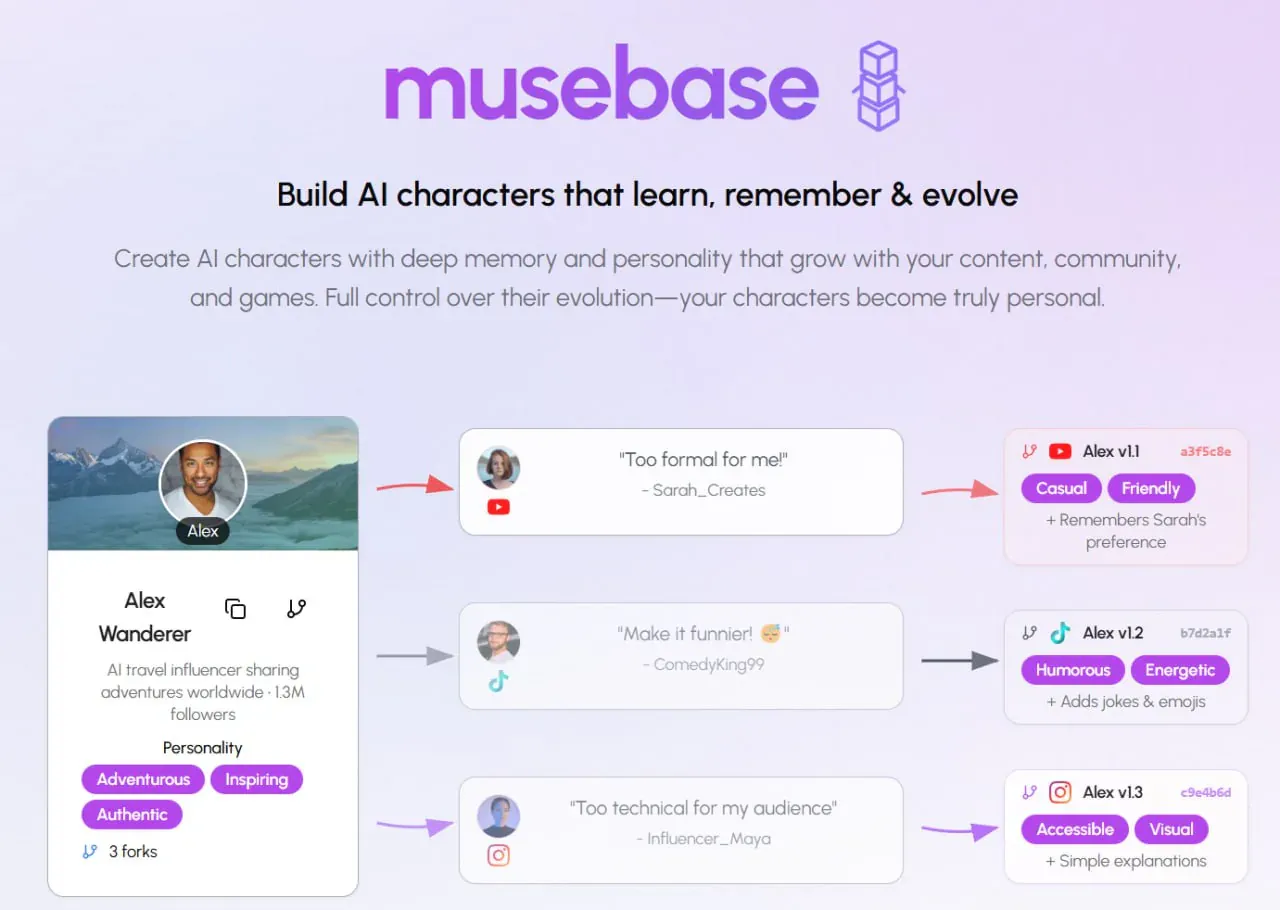
Creators who run a character across channels keep rebuilding it: lost prompts, a personality that drifts, a voice that changes from one tool to the next. Musebase kept one source of truth for a character’s personality, voice, and look—and let it grow with what it made.
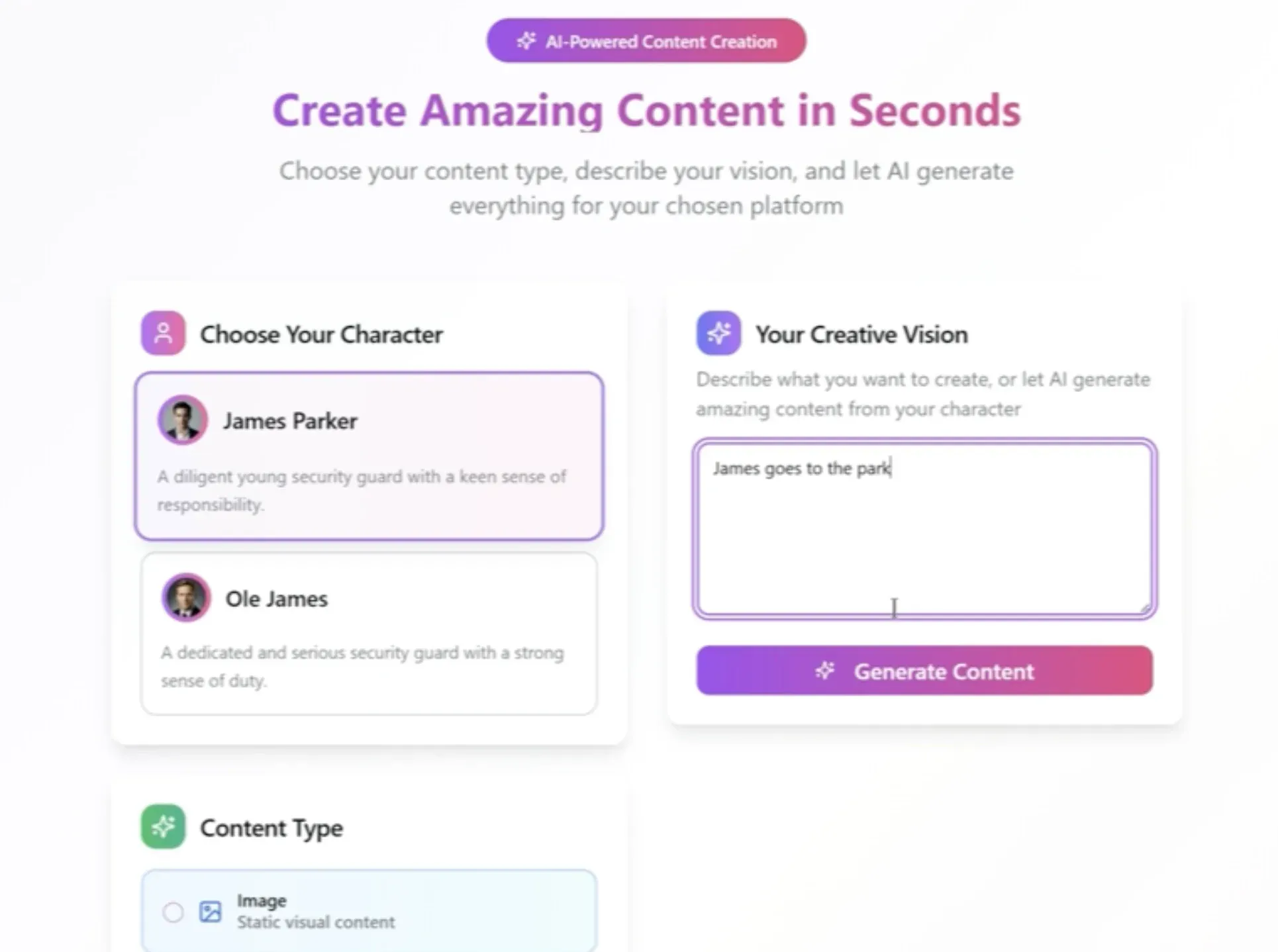
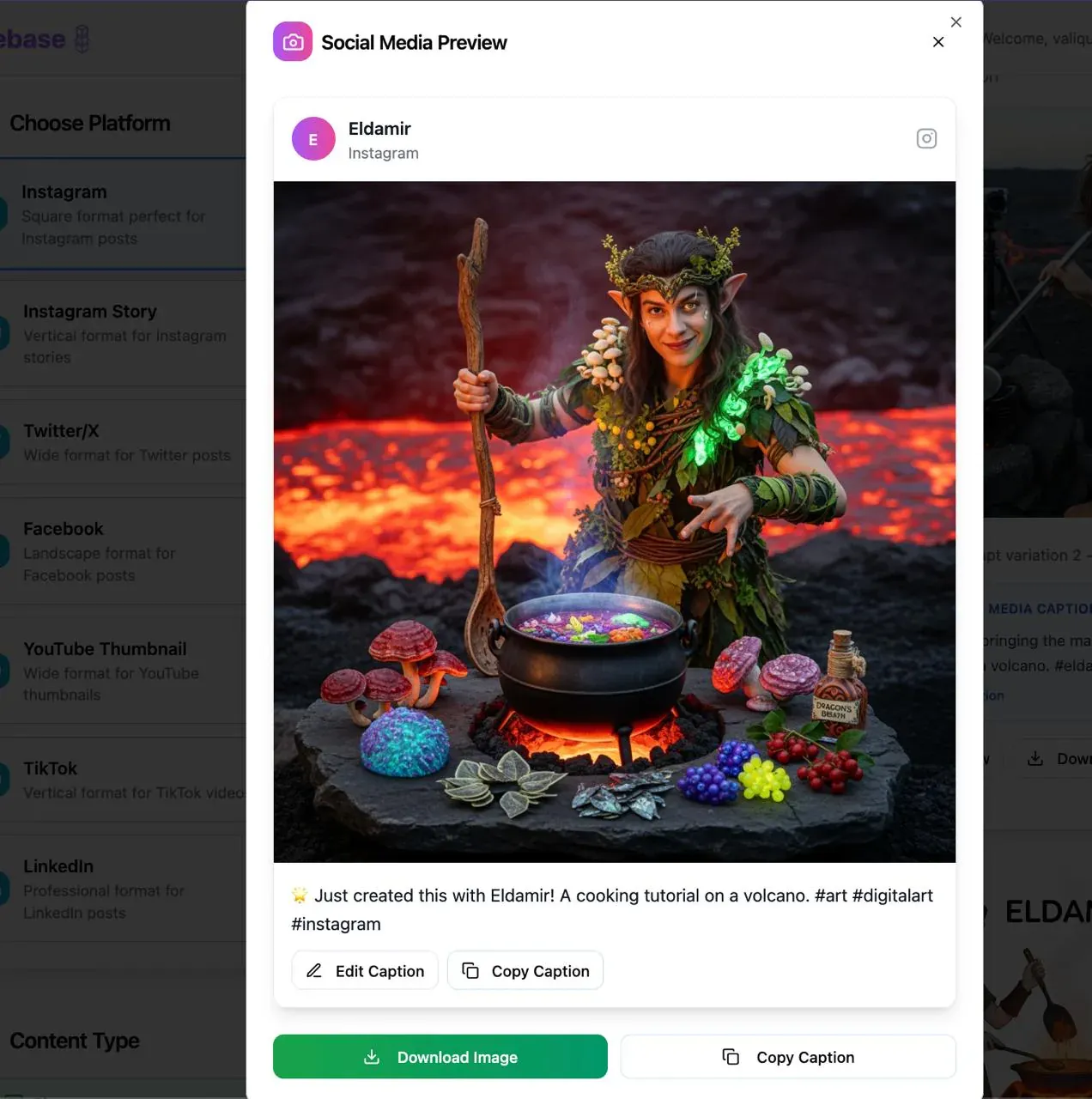
I built the systems behind that:
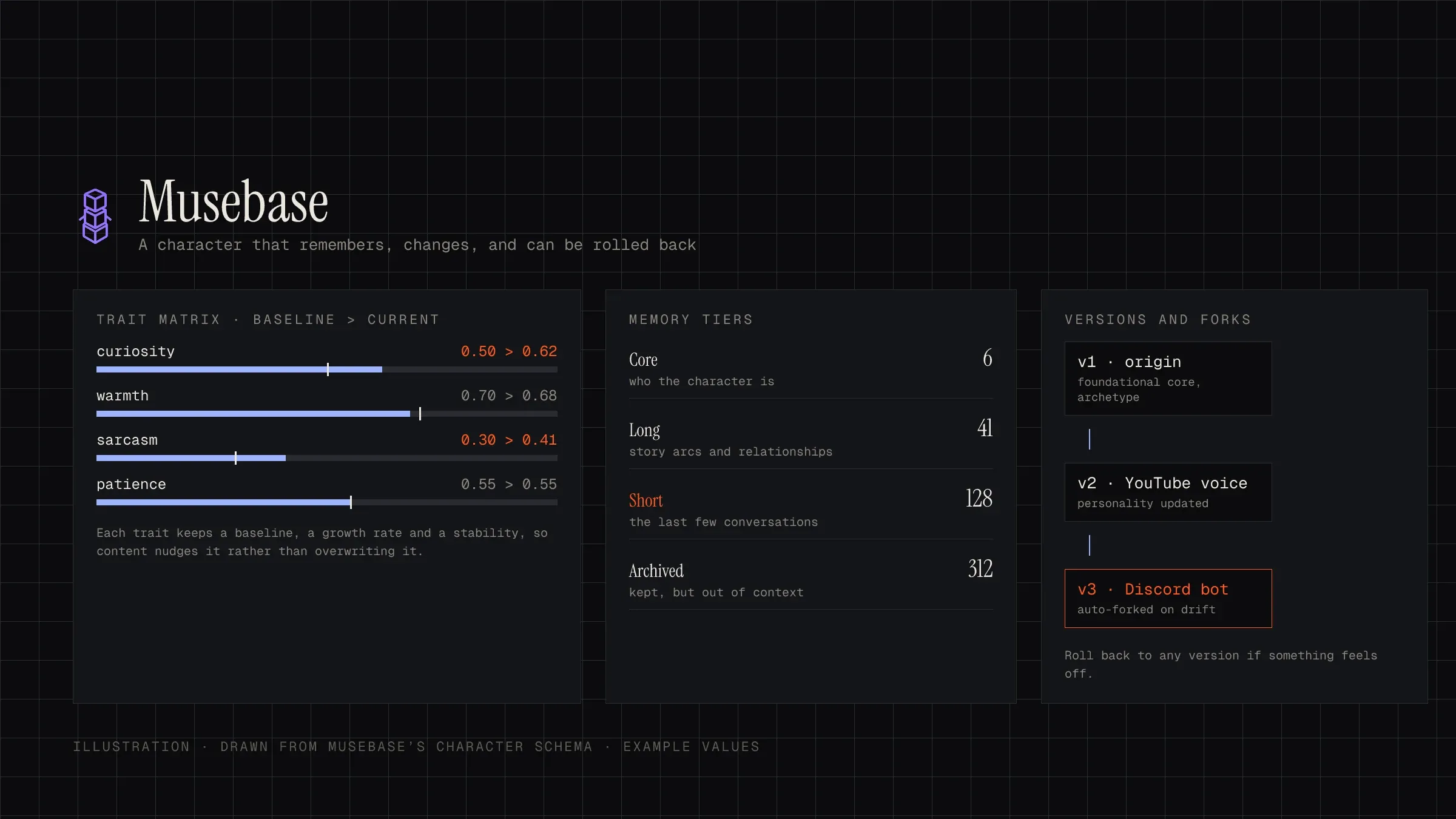
- A character engine. Each character has a foundational core and a trait matrix, where every trait keeps a baseline, a current value, a growth rate, and a stability. Content nudges traits instead of overwriting them, and each output is analyzed for trait and mood changes.
- Memory. Four tiers—core, long, short, and archived—with the story arc and emotional state each memory formed in, fed back into generation.
- Forks and versions. A character can be forked, versioned, and rolled back. Bots fork automatically when a personality drifts past a sensitivity you set, so an experiment never overwrites the original.
- Discord bots. Characters deployed as community bots, with their own routing and instances.
- Video. A timeline editor and video generation on Google’s Veo 3, with voices through ElevenLabs.
Billing ran on Stripe through Supabase functions. Musebase started in July 2025 and wound down at the end of the year.