Writing / Hong Kong / Essay · Aliquo Journal · September 2018 · 3 min read
Anxiety in Hong Kong: The Threat of Merging With China
“To be honest, I really hate China,” a frustrated Hong Kong local said to me. Students on the looming merger with China, and why most of them refuse to be called Mainland Chinese.
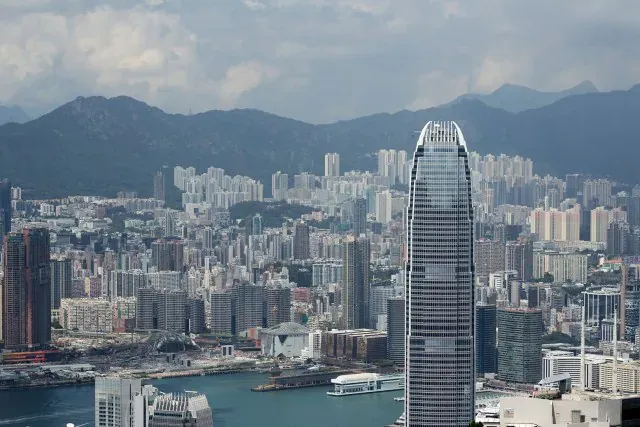
“To be honest, I really hate China,” a frustrated, Hong Kong local said to me. He is referring to the merger between China and Hong Kong within the next couple of decades. Like many, he is concerned that a way of life and cultural identity is under threat by the looming superpower touching Hong Kong’s northern border.
Twenty-one years have passed since Hong Kong became a part of China, an event recently celebrated by the territory for its two-decade anniversary in 2017. Hong Kong since then has spent years constructing its identity in a post-colonial era. In under 30 years, Hong Kong will go through another identity crisis as it veers into a second dramatic cultural shift. Some think that shift is already in motion.
On Dec. 19, 1984, in the Great Hall of the People located in Beijing, Margaret Thatcher and Zhao Ziyang signed the Sino-British Joint Declaration to peacefully hand over the territory of Hong Kong to China. On July 1, 1997, Hong Kong officially was under the authority of the People’s Republic of China (PRC). Under the new declaration, China cannot implement its socialist system in Hong Kong for 50 years, and Hong Kong’s “previous capitalist system and life-style shall remain unchanged.”
The one country, two systems policy has been in place since then, although whether the PRC has respected the policy has remained questionable since the Umbrella Revolution broke out in 2014. Activists caused disruptions across the city in protest of China influencing Hong Kong’s political system, which they believed went against the Sino-British Declaration of allowing Hong Kong to remain politically independent. In November 2016, China hasexercised its authority to ban Sixtus Leung and Yau Wai-ching, both advocates for Hong Kong’s independence, from serving in the local legislature. More recently, the pro-Beijing camp hastaken 2 of the 4 seats during the 2018 legislative election, making the merger between China and Hong Kong more evident as 2047 comes closer.
Another neighboring territory, Taiwan, strives for independence from China, which continues to display its military prowess in the South-China Sea. Fearing a comparable situation in Hong Kong, the question remains whether China will attempt to forcefully establish its dominance politically and militarily before it can merge. Doing so will overstep its established boundaries, but some feel China has no need to stay true to the 1984 joint declaration and Hong Kong Basic Law.
To understand from a Hong Konger’s perspective, I sought out what locals, specifically students, thought of the Hong Kong-Chinese merger. A recent college graduate said that he is “reluctant, but resigned… We want democracy, the PRC is not likely to give it to anyone.” He later added that “a lot of people immigrated to Hong Kong to escape from the CCP (Communist Party of China) in the first place. Including my dad’s family, who owned land and were well off, which meant they were targets for the CCP.”
It’s a sad fact to realize our education brainwashed us to think China is good.
Another student looking for residency abroad states that the main reason for his efforts revolves around the Hong Kong-China merger. “If Hong Kong is merged and sadly it is already happening, I can’t live in a place like this no more.” Quite a few students share this sentiment, as merging brings a slew of restrictive regulations and policies. The Internet is a target for such concern, as the merger could affect businesses and schools that revolve around an open and free Internet. The Savannah College of Art and Design, a Georgia-based school, has a campus in Hong Kong, whose continued operation there is uncertain due to the many services they use that are currently restricted by China. This is a major concern of another Hong Kong student, who, once the territory has merged, intends on “getting the fuck out.”
Most students I talked to do not consider themselves Mainland Chinese, and some even get offended when they are labeled as such. When asked about the new Chinese influences on the education system, one student shared: “It’s a sad fact to realize our education brainwashed us to think China is good.”
Hong Kong, as developed and educated as it is, has no military and when compared to China’s robust economy, military, and political influence, integration seems inevitable. The students I asked all shared the same grievances, and their opinion on Hong Kong’s attitude towards China remains negative. “So yes, reluctant acceptance is about right.” For now, Hong Kong remains Hong Kong. Not British nor Chinese, but its own unique, culturally distinct region of South-east Asia.