Orca
Orca accepts only what the evidence supports. Every answer carries a receipt, and what the evidence can't settle is named, not guessed.
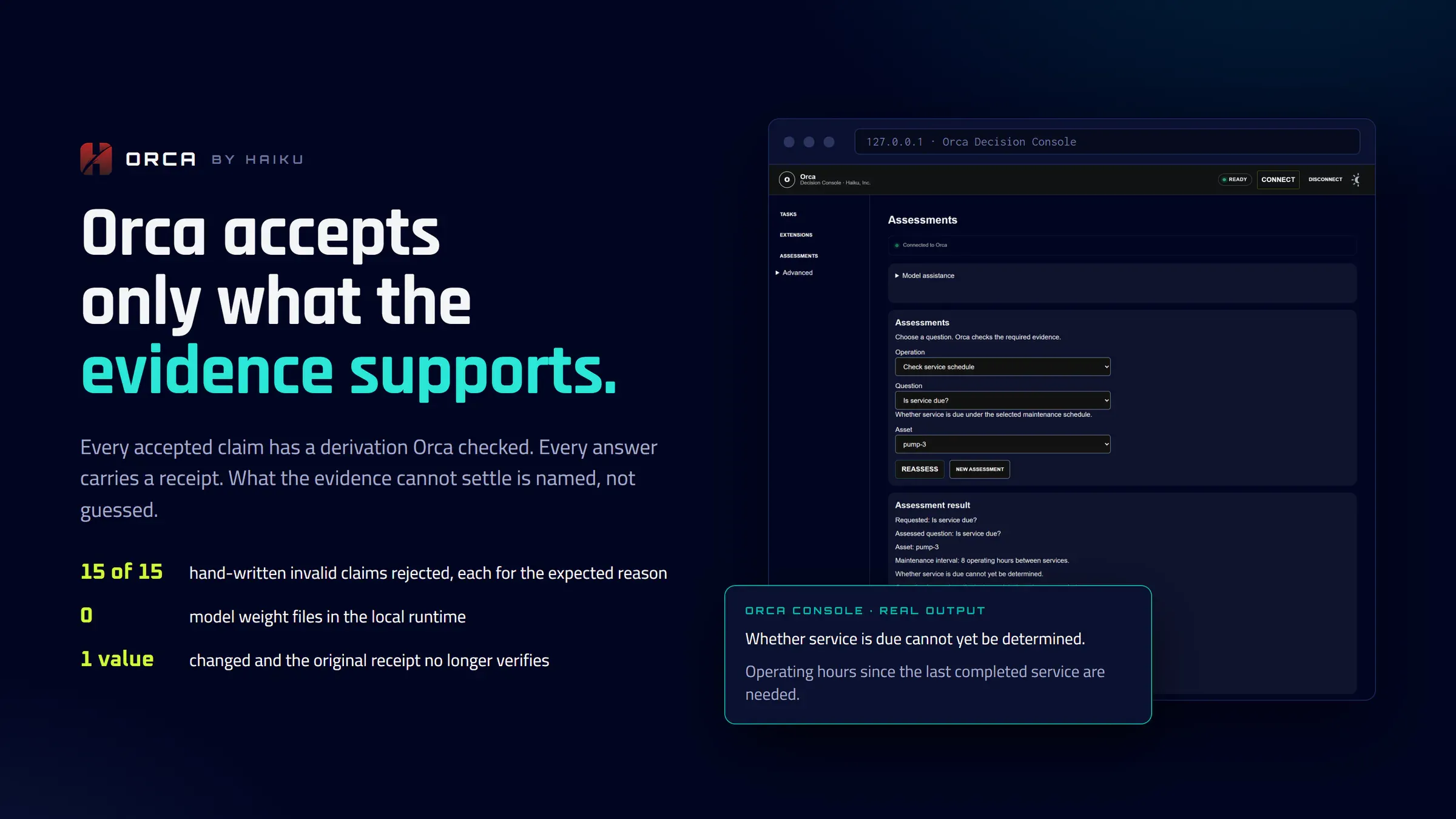
Confident, Cited, and Wrong
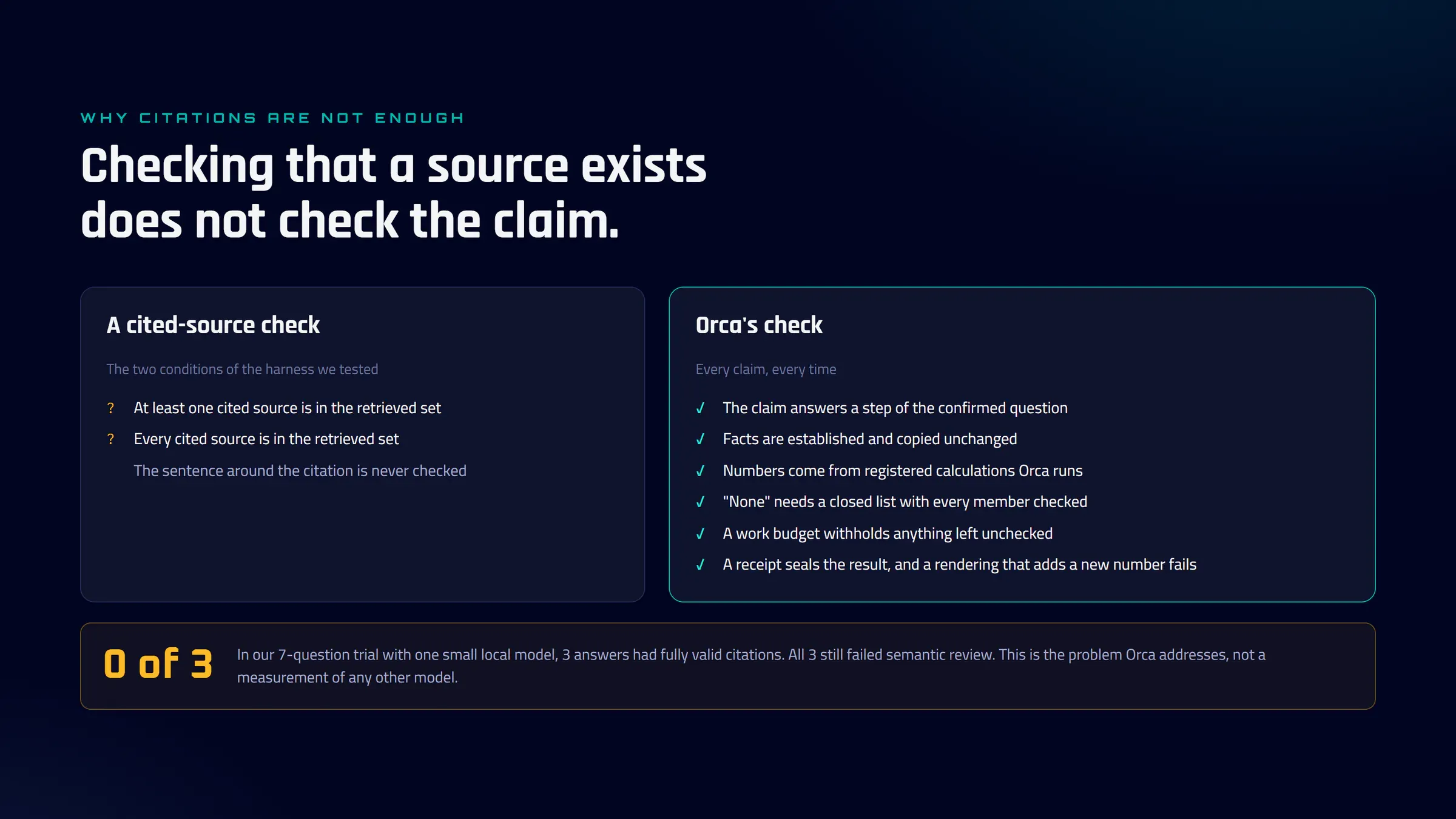
A language model blends two kinds of answer into one confident sentence: what it guessed, and what could have been proven. Citations don’t fix that; checking that a source exists doesn’t check the claim. In a seven-question trial with one small local model, three answers had fully valid citations—and all three failed semantic review.
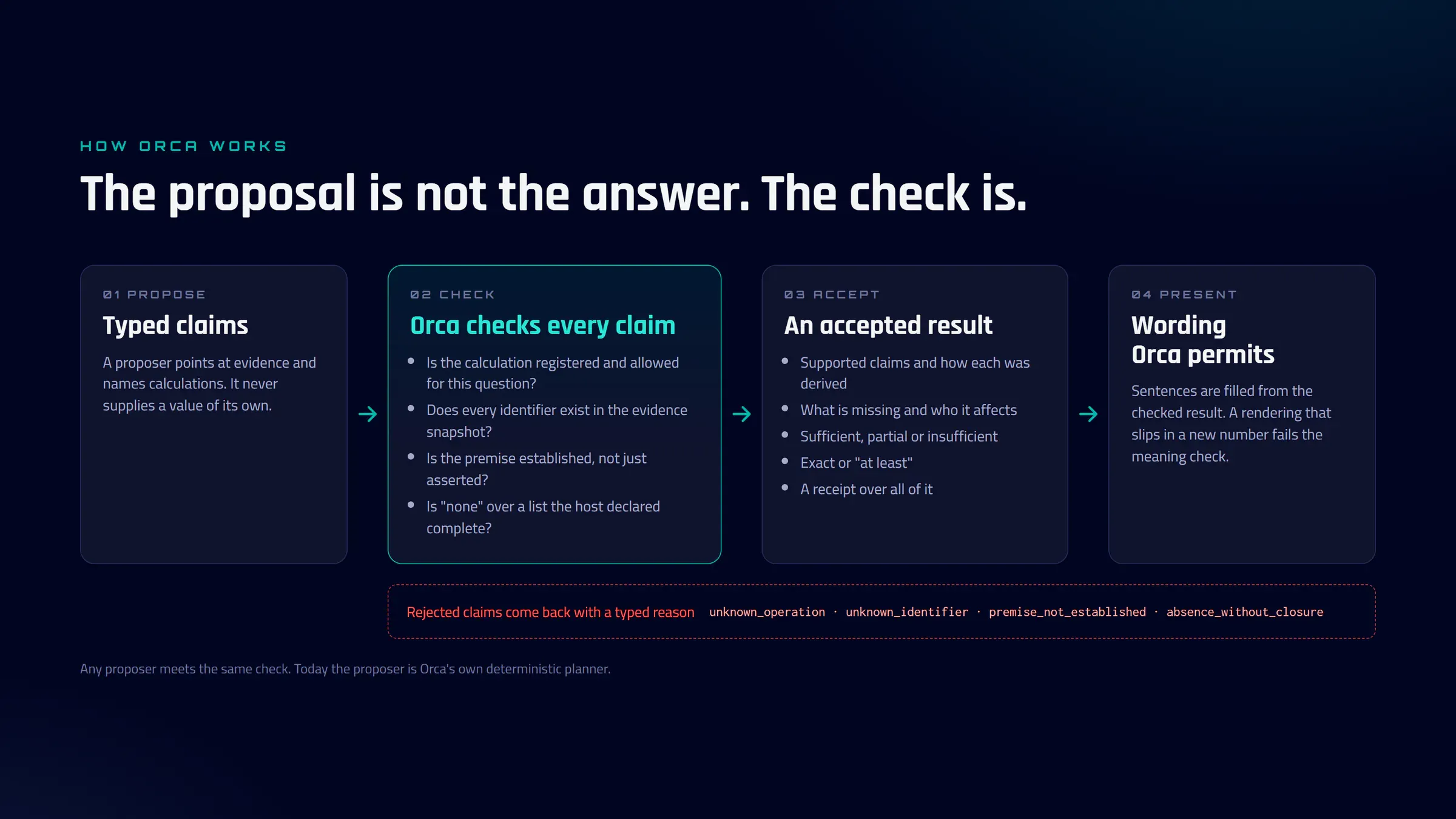
The Proposal Is Not the Answer
Orca makes the proposal and the answer two different things. A proposer, whether a model or a planner, never supplies a value of its own. It makes typed claims that point at evidence and name calculations. Orca checks every claim, accepts only what it can derive, and attaches a receipt. Rejected claims come back with a typed reason, and the final wording is filled in from the checked result—so a sentence that slips in a new number fails.
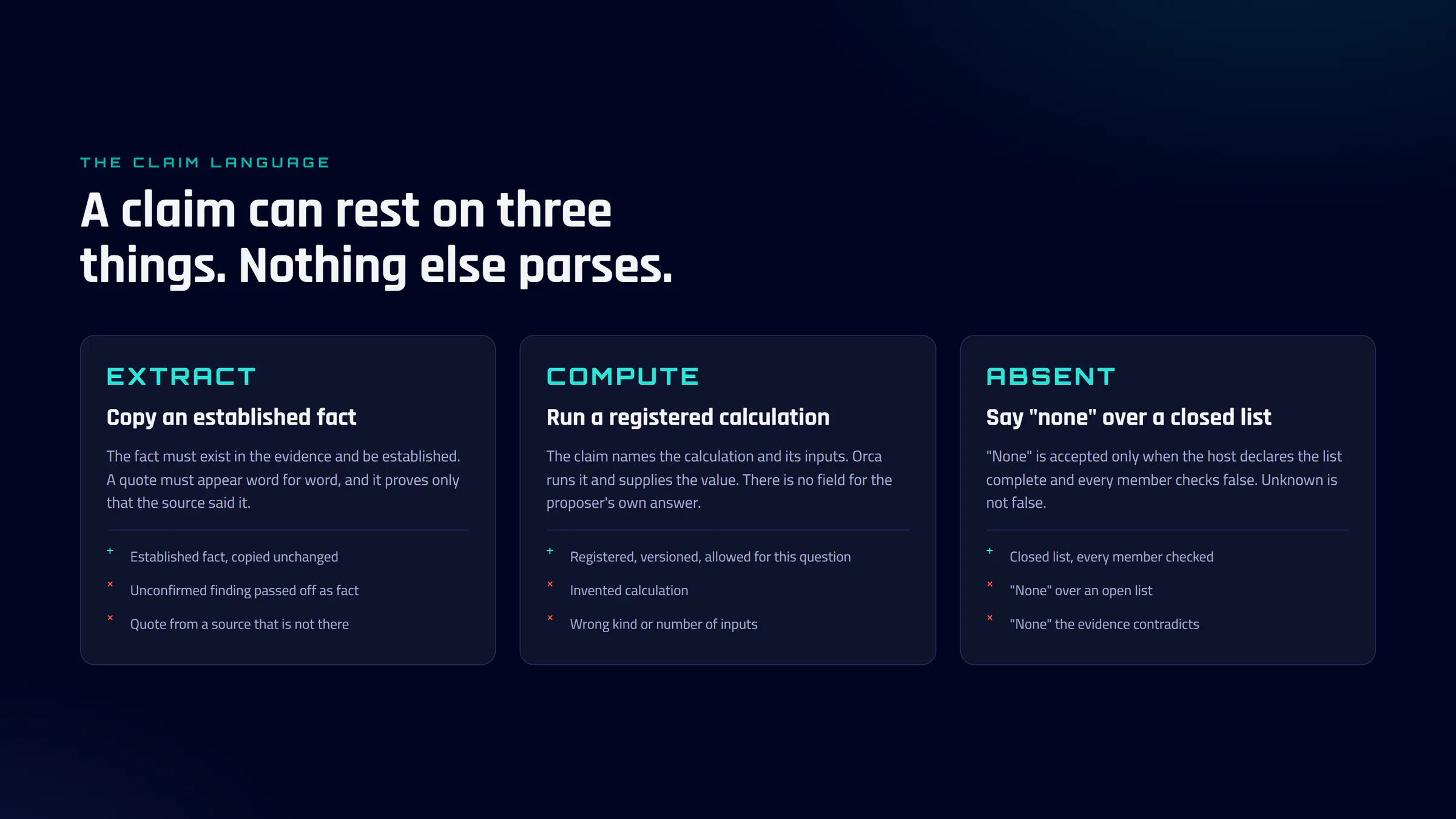
A claim can rest on exactly three things: it can copy an established fact word for word, run a registered and versioned calculation, or say “none” over a list that the evidence declares closed. Nothing else parses.
What It Does in Practice
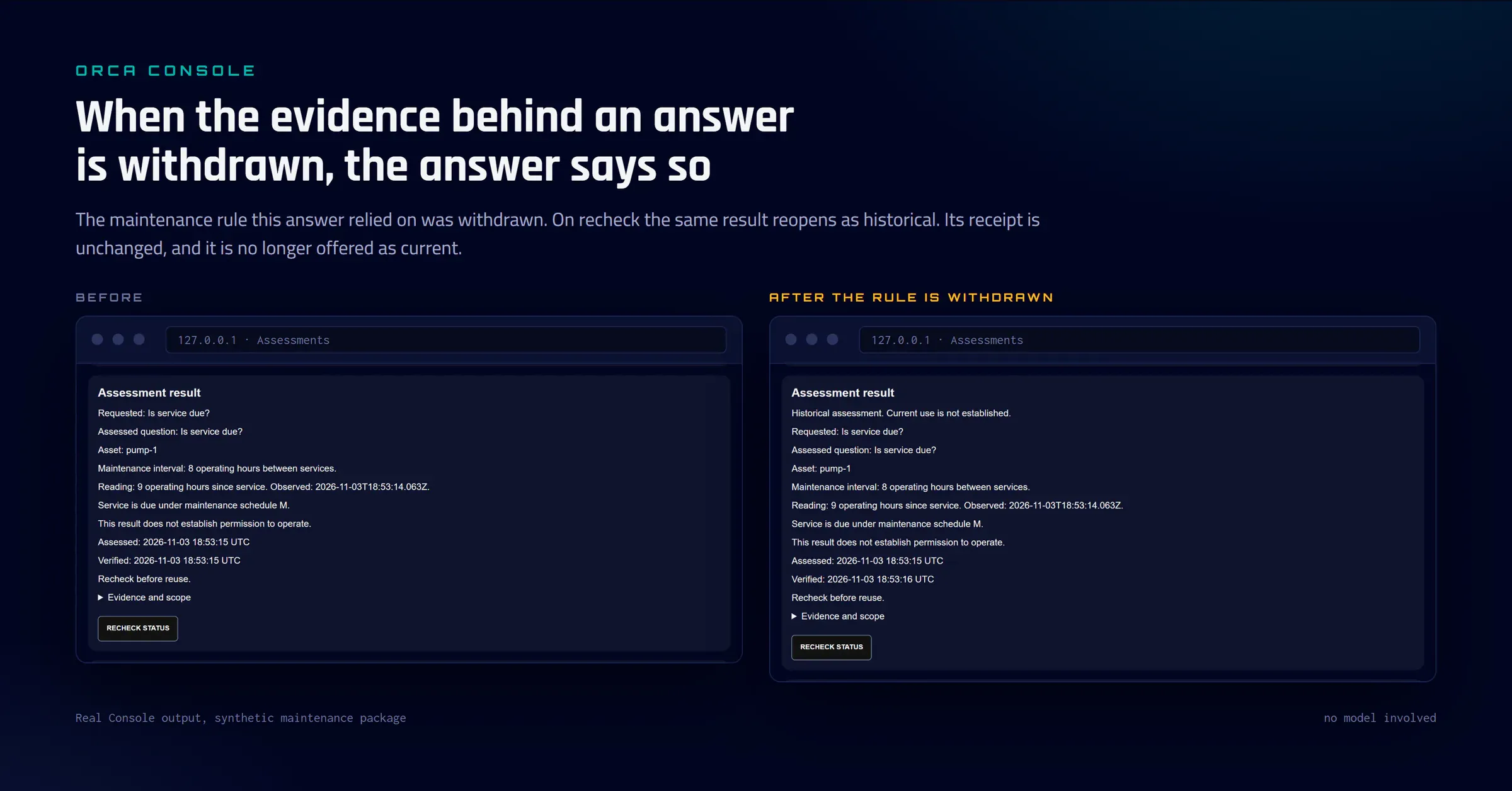
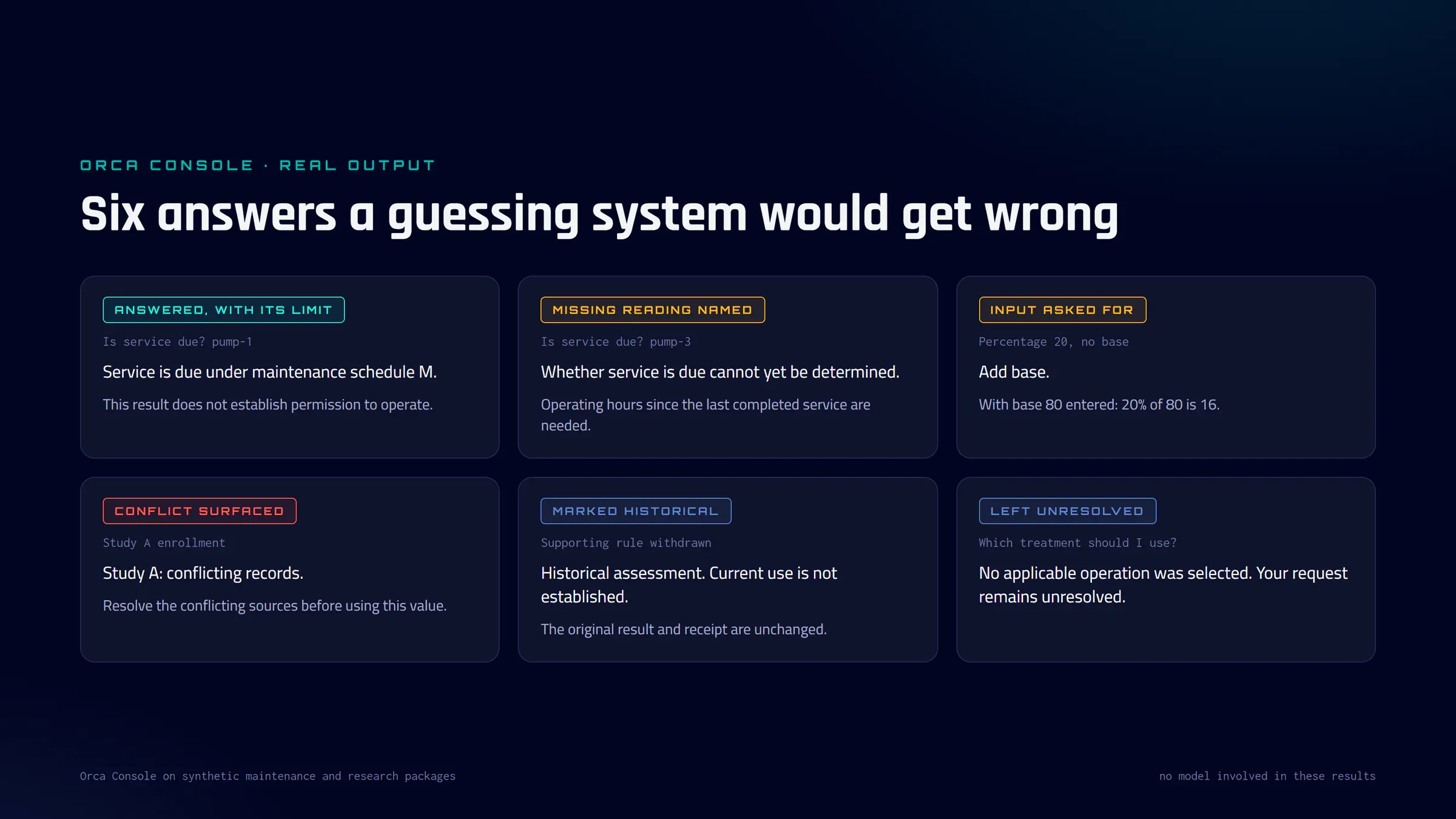
When the evidence is incomplete, Orca says what is missing instead of guessing. When a rule an answer relied on is withdrawn, the answer reopens as historical, and its receipt stays unchanged. When an input is missing, it asks for it.
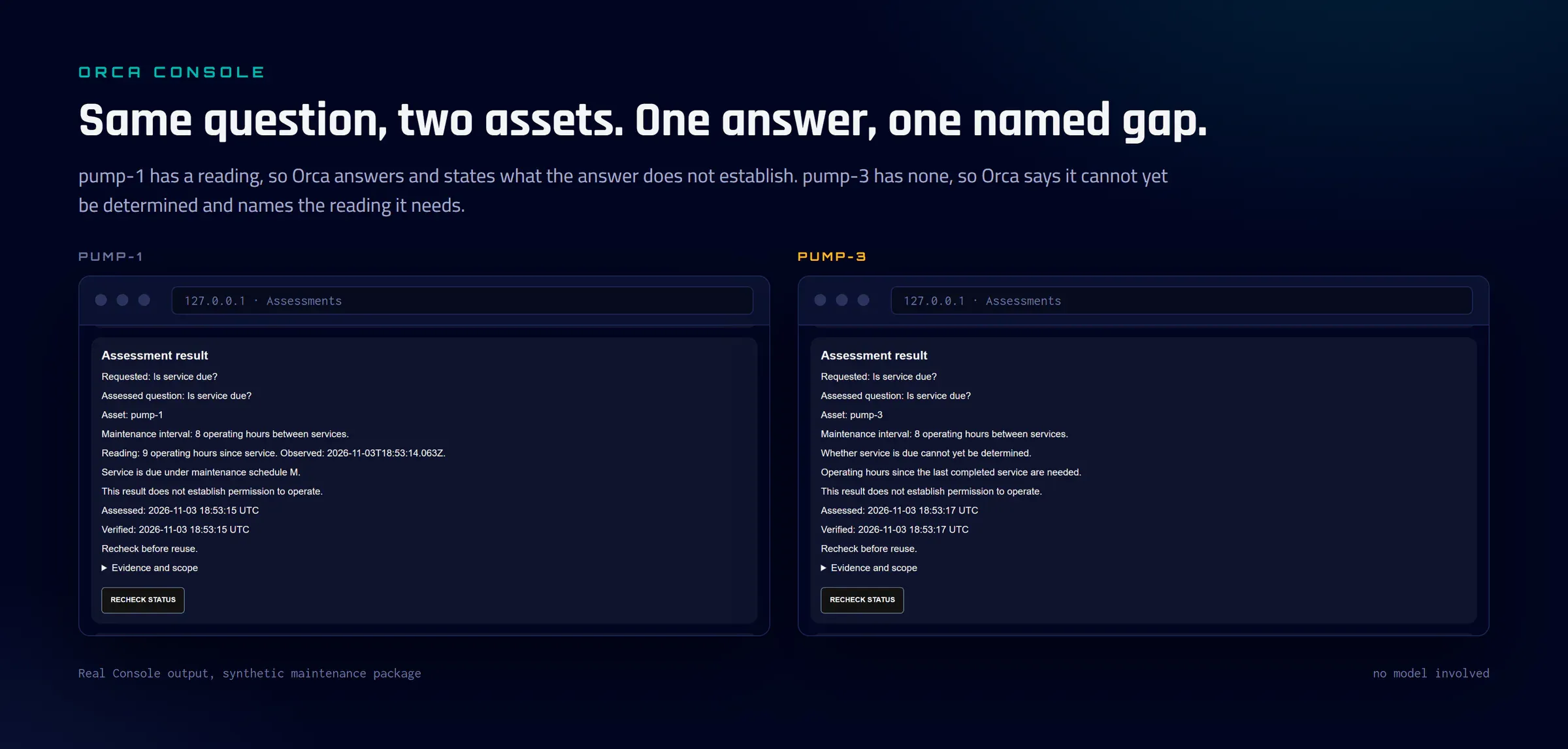
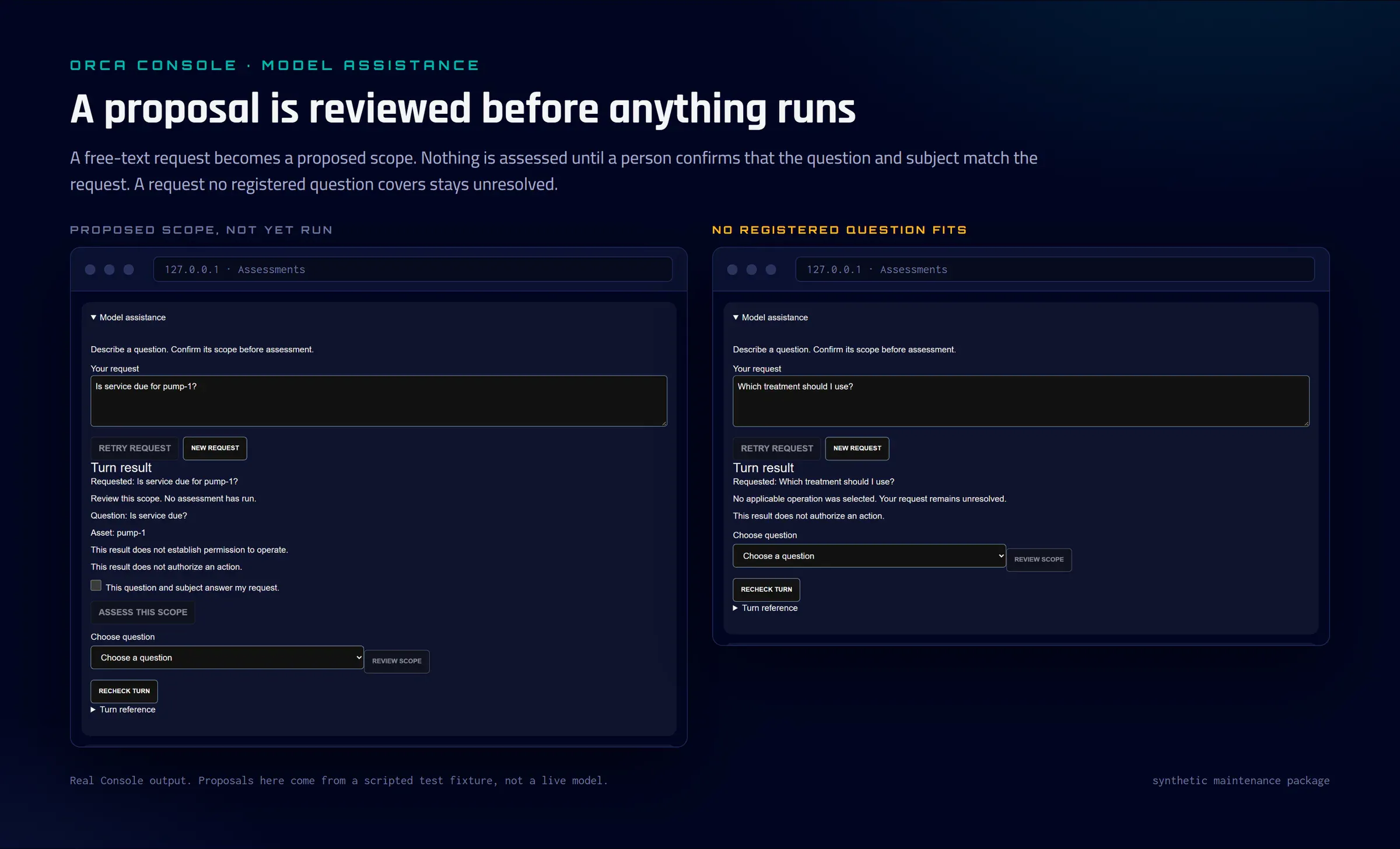
A free-text request becomes a proposed scope, and nothing runs until a person confirms it.
I test it the way an adversary would. Fifteen hand-written invalid claims, of the kinds a model produces, were all rejected for the expected reason. Change a single value in an accepted result, and its receipt stops verifying.
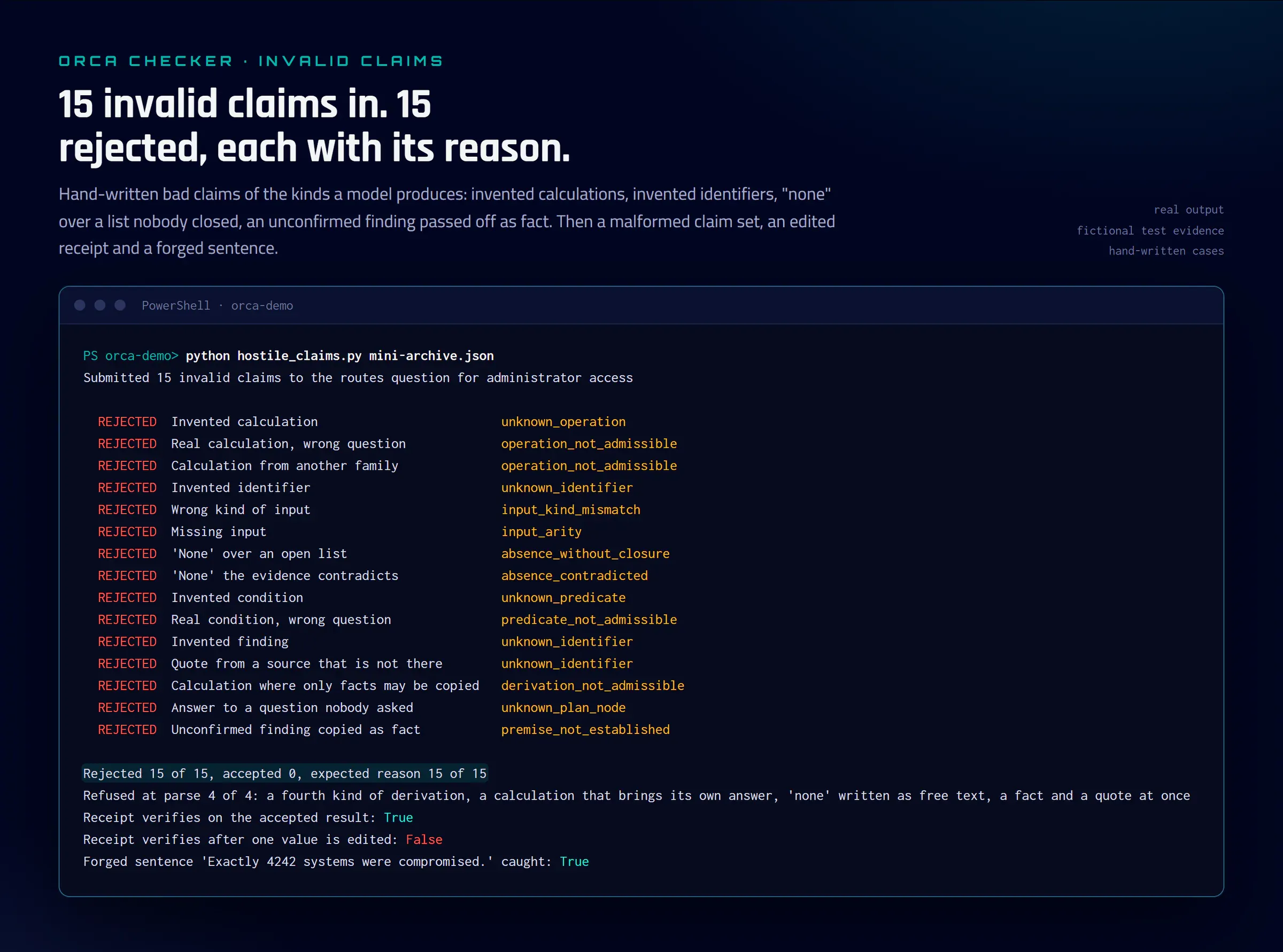
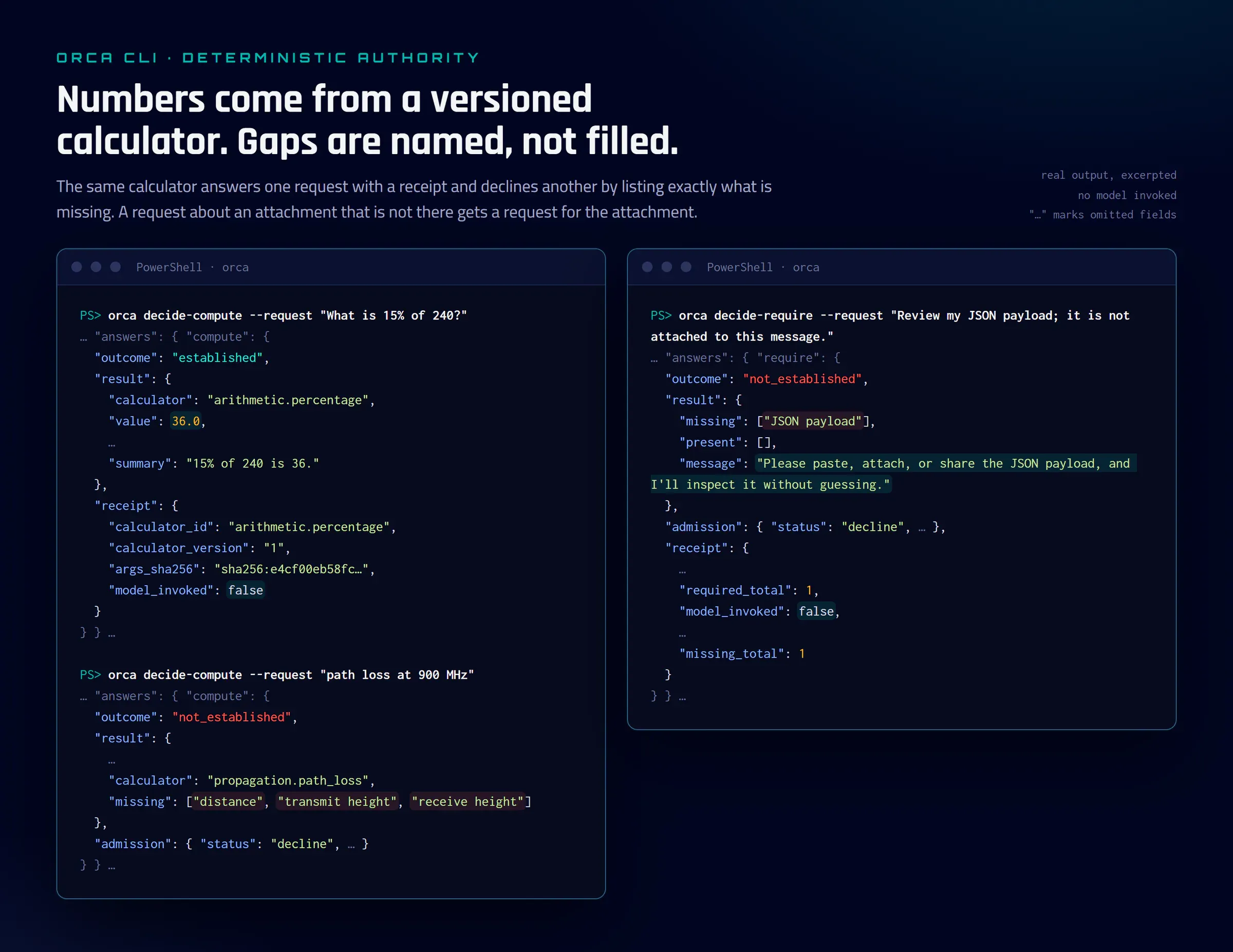
- invented claims rejected
- 15 / 15
- repeated questions, identical receipts
- 32 / 32
- objectives matched by an independent oracle
- 3 / 3
- median warm answer
- < 5 ms
Runs Where the Evidence Is
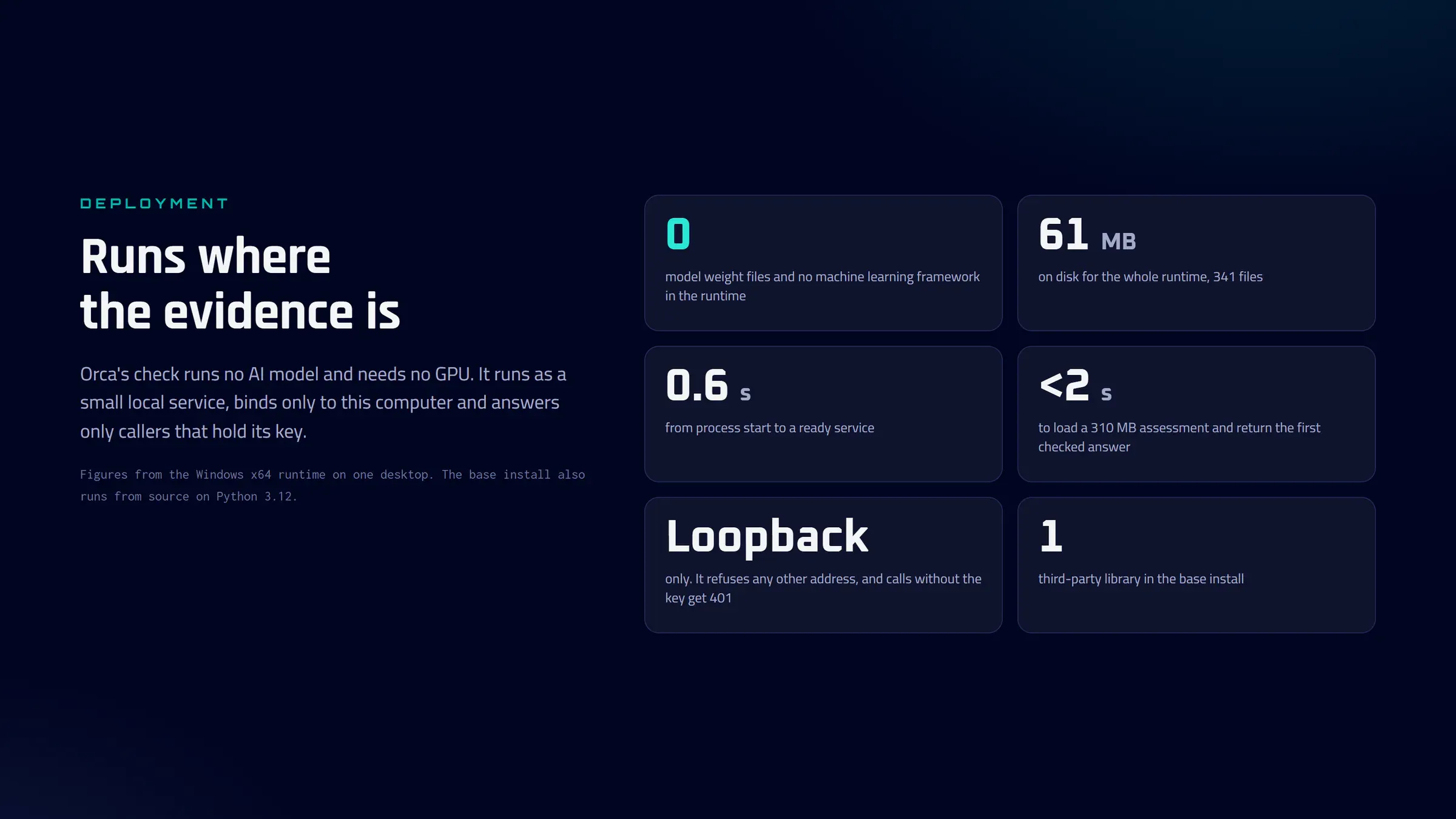
The check runs no AI model and needs no GPU. It is a small local service that binds only to the machine it runs on and answers only callers that hold its key. The whole Windows runtime is 61 MB, starts in 0.6 seconds, and has one third-party library.
Any proposer meets the same check. Behind it, I built a small in-house language model—about 300 million parameters, trained from scratch on one RTX 3080. Today, the default proposer is Orca’s own deterministic planner.
Where It Is Used
I started Orca in August 2026 to support HADES’s onboard autonomy work, where it is an advisory planner with no vehicle link and no keys; its candidates need explicit operator action. In October 2026, the University of Dayton announced a two-year, $500,000 National Security Agency grant to build a K-12 curriculum that teaches AI literacy and cybersecurity through game-based scenarios. Haiku is a named partner, and access-gated Orca is planned to power the project.